Blog
Executive Table Buying Guide: How to Choose the Right Table for a Professional Office

An executive table is more than a surface for a laptop and paperwork. In a CEO, MD or director’s office, the table often becomes the central piece around which daily work, meetings, storage and visitor interaction are organised.
However, the largest or most decorative table is not automatically the right choice. Room dimensions, work habits, storage requirements, chair position, cable management and visitor space all influence whether an executive desk works comfortably in everyday use.
Therefore, before choosing an executive table, consider how the desk will function inside the complete office rather than judging it only by appearance.
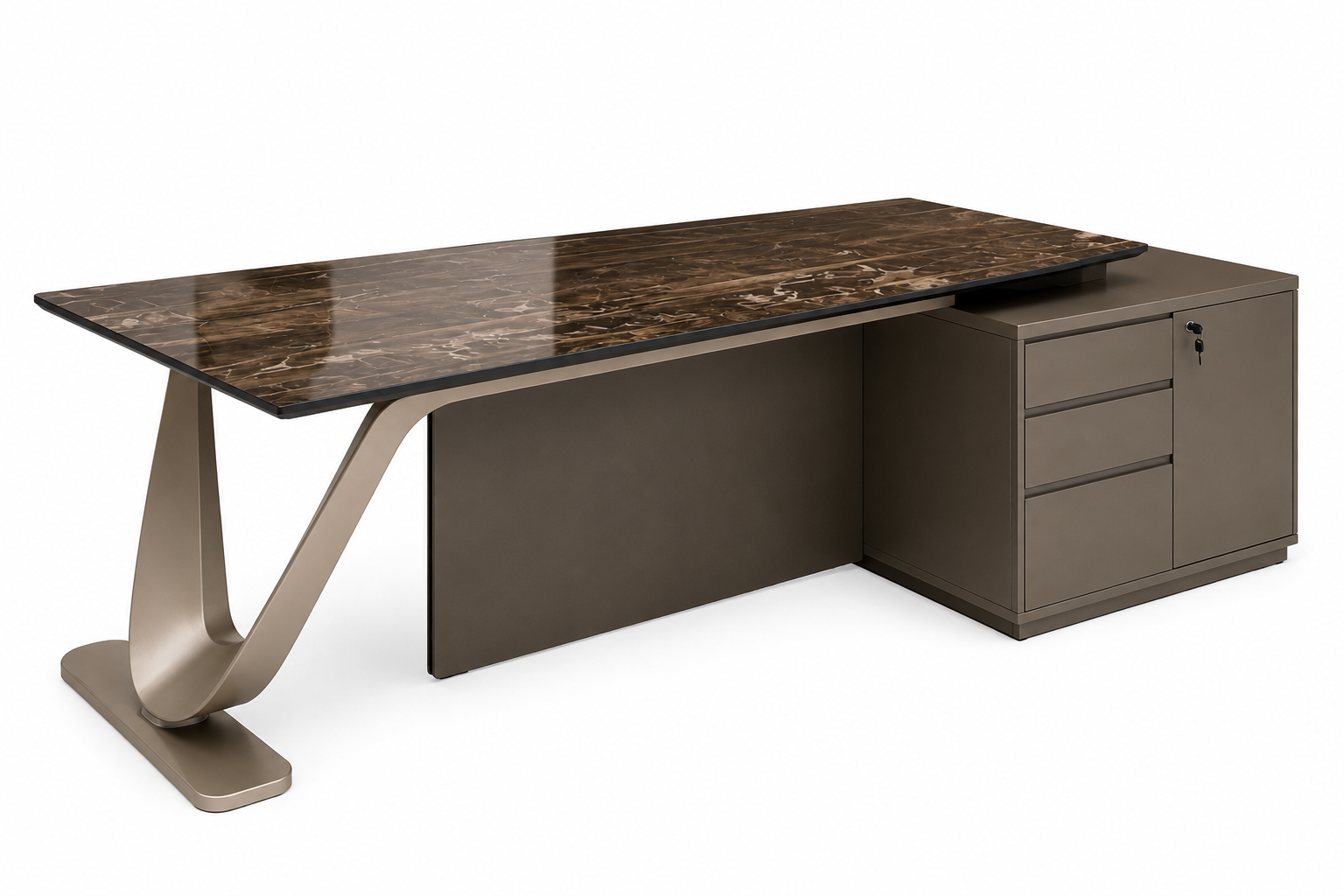
Corporate Luxe Furniture currently carries a dedicated Just Boss collection with products such as Boss Desk Beta, Boss Desk 2829, Director desks, Faux Leather Boss Table and Legacy Boss Desk, providing several executive-style formats to compare.
What Is an Executive Table?
An executive table is a larger office desk designed for senior-level workspaces such as CEO rooms, MD cabins, director offices and private corporate rooms.
Compared with a basic workstation, an executive desk often provides more working surface and may include additional storage, side units, cable-management space or a stronger visual presence.
Nevertheless, the purpose remains practical.
A good executive table should provide enough room for the equipment and documents you actually use while maintaining an organised office layout.
Depending on the office, that may include:
- Laptop or desktop computer
- Monitor
- Keyboard and mouse
- Documents and folders
- Phone
- Stationery
- Personal accessories
- Storage
- Visitor interaction space
Therefore, functionality should come before unnecessary size.
Executive Table vs Regular Office Desk
A standard office desk generally focuses on individual workstation efficiency.
An executive office desk, by contrast, usually needs to support a wider range of activities.
For example, a director may use the same desk for computer work, reviewing documents, signing papers and holding short discussions with colleagues.
As a result, executive furniture often requires a larger usable surface and a more deliberate layout.
However, a larger desk is useful only when the room can support it.
If the table reduces walking space or makes visitor seating uncomfortable, a more compact design may provide a better working environment.
Start With Your Office Size
Before selecting a design, measure the room.
This is one of the most important steps when buying an executive table.
First, measure the available width and depth. Then, consider everything else that needs to remain in the room.
That may include:
- Executive chair
- Visitor chairs
- Sofa
- Cabinets
- Shelving
- Centre table
- Side storage
- Door clearance
After placing these elements mentally—or marking them on the floor—you can estimate how large the desk should be.
A table should look proportionate to the office rather than filling most of the available floor area.
Executive Table for a Small CEO or Director Room
A smaller executive room requires discipline when selecting furniture.
Although a large boss table may look impressive in a showroom, it can make a compact cabin difficult to move through.
Instead, look for a desk that provides enough work surface without excessive depth or unnecessary extensions.
Furthermore, use storage efficiently.
Built-in drawers or side storage can reduce the need for additional cabinets. As a result, more floor space remains available for visitor seating and movement.
A clean layout can often make a small director room look more professional than an oversized furniture arrangement.
Executive Table for a Large Office
Larger executive rooms provide more flexibility.
For instance, a wider table can create a substantial working area while still leaving space for a visitor zone or separate lounge arrangement.
However, the desk should still maintain visual balance.
Avoid placing an enormous desk in the centre simply because the room is large. Instead, think about how the executive chair, visitor chairs, storage and lighting will work together.
In many cases, the most effective arrangement creates distinct zones:
- Primary working area
- Visitor discussion area
- Storage area
- Optional lounge area
Therefore, the table should anchor the workspace without dominating every part of the room.
Choose the Right Table Shape
Executive desks are available in different shapes and configurations.
The correct choice depends on the office layout and work requirements.
Straight Executive Table
A straight desk is one of the easiest layouts to manage.
It works well when the user mainly needs a clear working surface and separate storage elsewhere.
Moreover, a straight table can fit naturally against or near a wall while leaving more open space in front for visitor chairs.
L-Shaped Executive Desk
An L-shaped arrangement can provide additional working and storage space.
For example, one side can hold the computer setup while the second surface supports documents, files or accessories.
However, an L-shaped table requires more floor area.
Therefore, measure both sides carefully before choosing this configuration.
Executive Table with Side Storage
A table with integrated side storage can be useful when the user needs regular access to documents.
Furthermore, built-in storage can help maintain a cleaner desk surface.
This approach works particularly well in rooms where separate cabinets would consume too much space.
How Much Working Surface Do You Need?
More surface area can be useful, but only when it has a clear purpose.
Start by listing what remains on the table throughout the working day.
If you use one laptop and a few documents, an extremely large desktop may not add much value.
On the other hand, executives who work with several files, multiple monitors or frequent document review may benefit from a wider surface.
Therefore, select your executive desk according to real working habits.
A well-organised medium-sized desk can be more functional than a very large table covered with unused space.
Look at Storage Before Buying
Storage is one of the most practical considerations in an executive office.
Without proper storage, even an attractive desk can quickly become cluttered.
Consider whether you need:
- Drawers
- File storage
- Side cabinets
- Concealed compartments
- Open shelving
- Lockable storage
Moreover, think about which items need to stay within arm’s reach.
Frequently used files should be easier to access, while less important documents can remain in separate office storage.
Corporate Luxe’s current Lineary Desk, for example, includes concealed dual-side storage compartments as part of its desk structure.
This illustrates why storage should be evaluated as part of the table itself rather than as an afterthought.
Cable Management Matters
A modern executive desk should support the technology used in the office.
Computers, monitors, chargers, phones and other equipment can create visible cable clutter if the table does not provide enough space for organised routing.
Therefore, check how wires will move from the desktop toward electrical outlets.
An open under-desk area can also make cable organisation easier.
For example, the current Lineary Desk includes open under-desk space intended for leg comfort and wire management.
Even when choosing another model, this is the type of practical detail worth checking.
Choose Materials That Match the Office
The material and finish of an executive table strongly influence the appearance of the room.
Wood and wood-style finishes can create warmth, while simpler surfaces may suit a more contemporary office.
Some desks also combine multiple materials.
Corporate Luxe’s Lineary Desk, for example, currently combines an engineered-wood top with walnut veneer, a solid-wood base and leather-wrapped side panels.
However, material choice should not depend only on visual style.
Also consider:
- Surface maintenance
- Everyday use
- Scratch visibility
- Colour consistency
- Cleaning requirements
- Compatibility with existing office furniture
The aim is to create a desk that looks appropriate while remaining practical.
Executive Table Colour and Finish
Colour can change how heavy or light a desk appears within the room.
Darker wood tones often create a stronger visual presence. Meanwhile, lighter or simpler finishes may make a smaller office feel more open.
However, the table should coordinate with other major furniture pieces.
Consider the colours of:
- Executive chair
- Visitor chairs
- Cabinets
- Flooring
- Wall panels
- Sofa
- Curtains
You do not need to match every item exactly.
Instead, choose finishes that work together naturally.
Modern Executive Desk for Contemporary Offices
A modern executive desk usually relies on cleaner lines, simpler detailing and organised proportions.
This type of design can work well in offices with glass partitions, minimal storage and contemporary corporate interiors.
Moreover, simpler desk designs can make it easier to introduce a distinctive chair or visitor seating without making the room visually crowded.
If you prefer a contemporary office, prioritise:
- Clean surfaces
- Practical storage
- Controlled detailing
- Cable organisation
- Simple proportions
- Balanced materials
As a result, the room can feel professional without appearing overdesigned.
Boss Table for CEO and MD Rooms
The term boss table is often used when buyers are looking for a larger desk for senior management.
However, the buying decision should still be based on use rather than title.
For example, one CEO may need substantial document storage, while another mainly works digitally.
Similarly, an MD who frequently meets employees at the desk may need more clear space on the visitor side.
Therefore, two executives in equally senior positions may need very different table configurations.
Corporate Luxe currently groups several boss-oriented desks and tables inside its Just Boss collection, including Boss Desk Beta, Boss Desk 2829, Faux Leather Boss Table and Legacy Boss Desk.
Explore the Corporate Luxe Just Boss collection
Executive Table and Executive Chair Should Work Together
A good desk can still become uncomfortable if the chair does not fit correctly.
Therefore, consider desk height and chair adjustability together.
The user should be able to sit close to the table without the armrests, knees or chair base creating unnecessary interference.
Moreover, the chair should allow comfortable access to the keyboard, monitor and frequently used items.
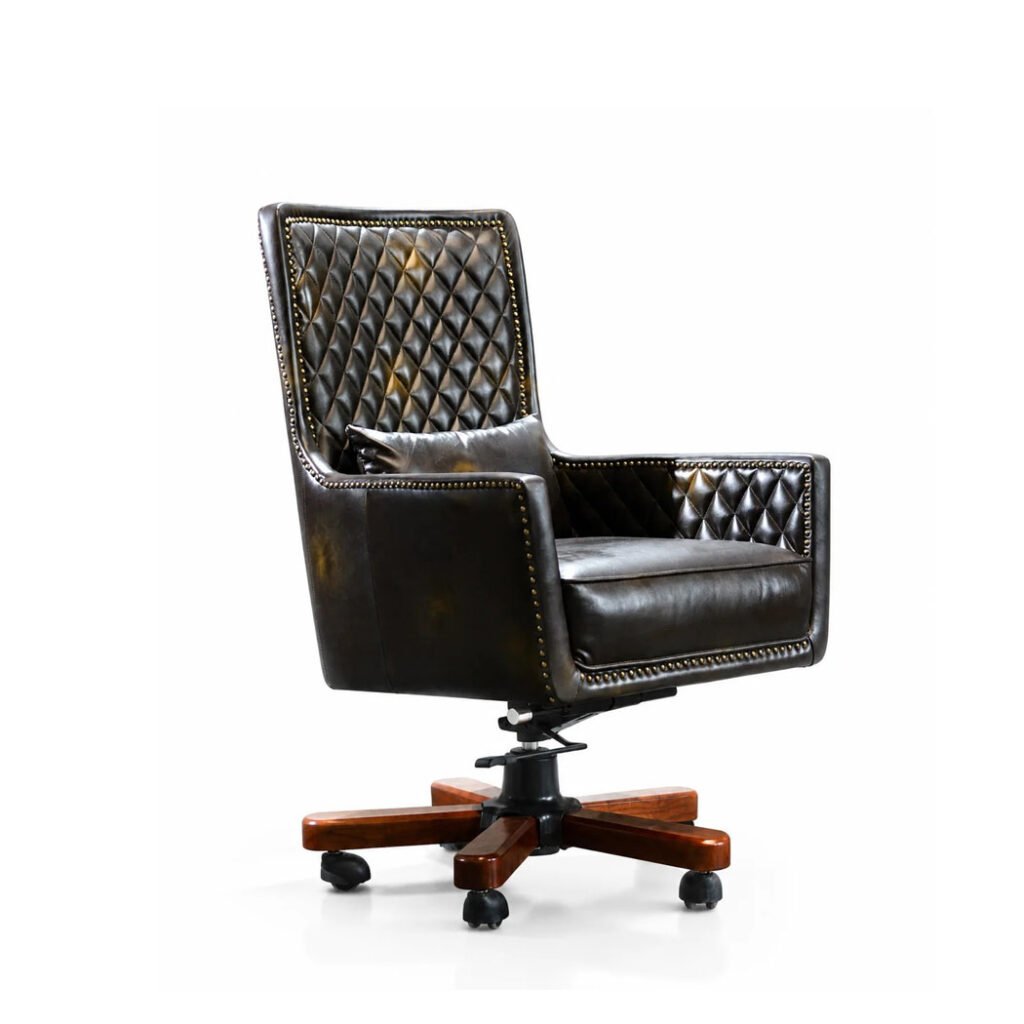
Corporate Luxe currently has several corporate chair formats designed for executive and professional workspaces, including high-back and desk-oriented models.
So, when planning the office, select the chair and table as one working system rather than two unrelated furniture purchases.
Do You Need Visitor Chairs in Front of the Table?
Many executive rooms require at least one or two visitor chairs.
If clients, employees or business partners regularly sit across the desk, leave enough clear space in front.
Visitor seating should not block the door or main walkway.
Furthermore, the chairs should be positioned far enough from the desk for comfortable sitting.
Corporate Luxe currently lists office guest chairs such as the Zephyre Visitor Chair and Maya Fort Chair for executive cabins, meeting areas and professional workspaces.
This type of seating can help complete the desk-facing discussion area.
Should You Add a Sofa to an Executive Office?
A sofa is useful when the room needs a separate conversation area.
Instead of conducting every meeting across the executive table, informal discussions can take place away from the primary workspace.
However, the office needs enough room to maintain two clear zones.
In smaller offices, adding both a large desk and a full sofa set may create unnecessary crowding.
Therefore, prioritise the work area first. Then add lounge seating only if sufficient space remains.
Executive Table vs Conference Table
An executive desk and conference table serve different purposes.
The executive table is primarily designed around one person’s daily work.
A conference table, meanwhile, needs to support multiple participants equally.
Therefore, do not replace a proper meeting table with an oversized boss desk simply because several people occasionally need to meet.
If the office frequently hosts larger discussions, a dedicated meeting or conference space will usually create a more effective layout.
Corporate Luxe currently has separate Corporate Table and Corporate Conference Table collections, which shows the distinction between individual executive furniture and group meeting furniture.
Think About Monitor Placement
Monitor placement affects both comfort and desk organisation.
Before buying, determine whether you will use:
- Laptop only
- One monitor
- Dual monitors
- Monitor plus laptop
- Additional desktop equipment
Then consider how much surface depth is required.
A desk that looks large from the front may still provide insufficient usable depth once monitors and other equipment are placed on it.
Therefore, evaluate usable workspace rather than relying only on overall dimensions.
Keep the Executive Desk Organised
An executive office often receives clients, employees and business partners.
As a result, visible desk clutter can affect the overall appearance of the room.
A few simple habits can help:
- Keep frequently used items within reach
- Move older files to storage
- Use concealed cable routing
- Avoid unnecessary accessories
- Maintain clear writing space
- Organise documents before meetings
The table should support productivity rather than become storage for everything in the office.
Avoid an Oversized Boss Table
One of the most common mistakes is choosing a table simply because a larger piece appears more impressive.
However, an oversized boss table can create several problems.
It may reduce walking space, push visitor chairs too close to the wall and make other furniture difficult to position.
Additionally, large desks can look disproportionate in compact rooms.
Therefore, select the size that fits the office—not the largest model available.
Avoid Choosing Design Before Function
Another mistake is falling in love with the table design before checking practical requirements.
For example, a desk may have an attractive finish but inadequate storage.
Another model may provide a large surface but poor cable organisation.
Therefore, use a simple sequence:
Function → Size → Storage → Material → Design
This keeps the buying decision focused on everyday use.
How to Measure Your Office Before Buying
Before placing an order, measure the room carefully.
Start with the room width and length.
Then mark the expected desk position.
Next, consider the executive chair behind the table and visitor chairs in front.
After that, account for cabinets, doors and other furniture.
Finally, confirm delivery access, including:
- Door width
- Lift access
- Stairways
- Corridors
- Building entrance
Large executive furniture may require more access clearance than expected.
Therefore, delivery measurements matter almost as much as room measurements.
Executive Table for a Professional First Impression
An executive room should look organised rather than excessively decorated.
The table plays a major role because it usually occupies the central working position.
However, professional appearance comes from proportion and consistency—not simply from expensive-looking furniture.
A correctly sized executive table, appropriate chair, coordinated visitor seating and organised storage can create a much stronger impression than an overcrowded room.
Therefore, treat every furniture piece as part of one layout.
How to Build the Complete Executive Workspace
Start with the desk because it determines the main working position.
Next, select an executive chair that works with the desk height and dimensions.
Then, add visitor seating based on how often short meetings take place.
Afterward, introduce storage.
Finally, if the room is large enough, create a separate lounge area.
This sequence prevents unnecessary furniture from taking space before the essential workstation has been planned.
Explore Executive Table Options at Corporate Luxe Furniture
Corporate Luxe Furniture currently carries multiple executive-oriented desks and tables through its Just Boss collection. The range includes Boss Desk Beta, Boss Desk 2829, Director models, Faux Leather Boss Table and Legacy Boss Desk, while Lineary Desk provides another executive workstation option with integrated storage and cable-management considerations.
Browse the Just Boss collection
When comparing options, begin with room size and actual work requirements. Next, decide how much surface and storage you need. Then, check material, cable management and chair compatibility. Finally, choose an executive table that fits the office naturally instead of forcing the office to fit the table.
Frequently Asked Questions About Executive Table
What is an executive table?
An executive table is a desk designed for CEO, MD, director and senior-management workspaces. It typically provides a larger work area and may include storage or other organisational features.
What is the difference between an executive table and a regular office desk?
A regular desk generally supports basic individual work, while an executive table often provides more surface area, storage and space for different daily activities.
Is a boss table the same as an executive table?
The terms are often used for similar senior-office furniture. However, individual products may differ in size, configuration, storage and material.
How do I choose the right executive table size?
Measure the room and account for the executive chair, visitor chairs, storage, doors and walkways. Then choose a table that leaves enough open space for comfortable movement.
Is an L-shaped executive desk better?
An L-shaped desk can provide additional work and storage space. However, it requires more floor area, so it works best when the office dimensions can support it.
What storage should an executive desk have?
The right storage depends on your work. Drawers, file compartments, side cabinets and concealed storage can all be useful depending on how many documents and accessories you use.
What should I look for in a modern executive desk?
Consider clean design, appropriate dimensions, practical storage, cable management, suitable materials and compatibility with the executive chair.
Which colour is suitable for an executive table?
The colour should work with the existing chair, cabinets, flooring and other office furniture. Dark and natural wood tones can create a stronger presence, while lighter finishes may suit more minimal interiors.
Do I need visitor chairs with a boss table?
If clients or employees regularly meet you at the desk, one or two visitor chairs can make the space more functional.
Can I place a sofa in the same room as an executive desk?
Yes, if the office has enough space to create a separate lounge area without restricting movement around the primary workspace.
Should an executive table have cable management?
It is useful for offices that use computers, monitors, chargers and other electronic equipment. Organised cable routing can keep the working surface and under-desk area cleaner.
Where can I find executive tables at Corporate Luxe Furniture?
Corporate Luxe currently lists several executive-oriented desks and tables through its Just Boss collection, including Boss Desk and Director models.